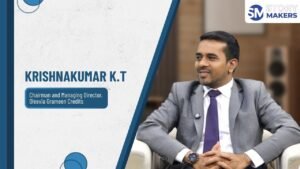
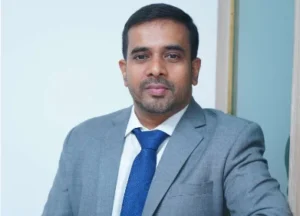
My mission statement is simple: “To make every individual self-reliant.” After founding an RBI-licensed NBFC and working 16 years in banking and finance, I’ve learned something counterintuitive—financial inclusion isn’t really about money. It’s about dignity, choice, and the human right to dream.
Let me take you back to a moment that changed my entire approach to business. I was visiting a remote village in Kerala, meeting potential clients for what would become Oleevia Grameen Credits. A woman selling vegetables by the roadside caught my attention. She needed just ₹10,000 to expand her small enterprise, but every bank had rejected her because she didn’t fit their “profile.”
When I asked her what the loan meant to her, she didn’t talk about vegetables or profits. She said, “Sir, I want my daughter to say her mother is a businesswoman, not just a vendor.” That’s when I understood—access to credit isn’t transactional; it’s transformational.
This insight became the foundation of Oleevia Grameen Credits. We designed our NBFC specifically for those the system overlooks: street vendors, women entrepreneurs, tribal communities, and yes, even celebrities who need quick, hassle-free capital. The amounts might be small, but the impact is enormous.
Traditional banking operates on a principle of exclusion disguised as “risk management.” No collateral? Rejected. Informal income? Rejected. Wrong zip code? Rejected. We flipped this model. At Oleevia, we ask: “What’s your dream?” and “How can we help make it happen?” Our underwriting process evaluates character, commitment, and community ties—not just credit scores.
Through our Multi-State Agro Cooperative Society, we’ve extended this philosophy to farmers. Indian agriculture contributes significantly to GDP, yet farmers remain among our most financially vulnerable citizens. We don’t just provide business loans; we share expert knowledge, connect farmers with markets, and help them understand their economic power.
Financial literacy is the missing piece in India’s growth story. You can give someone a loan, but without understanding interest rates, savings, investment, and financial planning, you’ve only given them temporary relief, not lasting freedom. That’s why at JIB (Jnan Institute of Bharat), we’ve integrated financial education into our diploma and skill development programs.
Through KITE Dream Hub, we offer practical MBA training for individual entrepreneurs—not theoretical frameworks from textbooks, but real-world strategies they can implement immediately. We teach street-smart financial management alongside formal business principles because both matter.
The results speak louder than any impact report. We’ve created over 500 jobs for freshers, differently-abled individuals, and tribal community members. But more importantly, we’ve sparked something intangible—hope. When a transgender person walks into Oleevia Foundation and leaves with not just financial support but comprehensive 360° social assistance, they’re not just getting aid; they’re being told, “You belong in this economy.”
Our approach at OWN Restaurant and Chai by Own embodies this philosophy in a different way. By sourcing organic ingredients from small farmers through Oleevia Farmco and serving them in a hygienic environment, we’ve created a complete economic ecosystem. Farmers get fair prices, customers get quality food, and we prove that ethical business practices can be profitable.
Self-reliance isn’t achieved in isolation—it’s built through networks. Sukrutha Keralam, our global Malayali initiative, uses crowdfunding to support education, healthcare, housing, and entrepreneurship. We’re proving that diaspora communities can be powerful engines of inclusive growth when properly mobilized.
What excites me most about Oleevia Group’s journey isn’t our expansion across 10 business segments or our national presence. It’s the WhatsApp messages I receive from clients who’ve gone from borrowers to lenders, from vendors to shop owners, from job seekers to job creators. That’s the multiplier effect of true financial inclusion.
As we work toward transforming Oleevia Grameen Credits into a fully digital bank, we’re not chasing technological trends. We’re asking: “How can digital infrastructure serve the last mile?” Because self-reliance in the 21st century means ensuring everyone—regardless of location, education, or background—can access the tools of economic participation.
The woman selling vegetables? Her daughter is now studying business management. That’s not charity. That’s not corporate social responsibility. That’s what happens when you treat financial inclusion as a fundamental right, not a favor.
Building self-reliance means building a nation where every individual has the agency to shape their destiny. That’s not just my mission—it’s an economic imperative and a moral obligation. And it starts by recognizing that behind every loan application is a human story waiting to be empowered.